

Something's Missing: On Doomscrolling in the Underworld and the Rituals We Can't Help But Build

Someone in my life is not well, and I’ve spent a good deal of time as their sidekick in the Serious Disease circle of the Underworld. They are well-loved and have several sidekicks to support them. I signed up to be present during a particularly involved course of treatment. It required sourcing bland snacks and extra sweatshirts, ducking out to pick up prescriptions, asking nurses if they wanted me to grab them a chai oat latte.
Medical environments in the United States tend to be harsh no matter how many warmed-up blankets said nurses bring by. The center we visited was clean and efficient, but almost sadistically drab; the only “art” on the walls was a New Testament quote that washed over me with all the force of a phrase from a Random Calligraphy Generator. There are two types of people in these spaces: the ones undergoing treatments so grueling that some patients, simply driving by the building years later, have to pull over to vomit. And the people taking care of those people.
I never did get to know the other sidekicks at the center. I’d nod and smile as I walked past to the bathroom, where I’d flush twice as a pharmacist advised me to do when sharing a toilet with people receiving these medicines. Sometimes I’d wave. When our eyes met, something compassionate would flow between us. And I’d keep moving.
It became clear that everyone walked into the building clothed in psychic armor, with the notable exception of those patients who were so depleted they’d become passengers in their own bodies. The rest of us wore invisible chainmail. You could hear it in the voices of the doctors and nurses, a certain brightly polished tone that shifted their identity from Fellow Human Being In An Unfair Fucking World to Competent, Even Sunny Medical Professional.
As time went on, I started to experience this very specific feeling when I walked in. I felt exactly like I’d forgotten my keys. Like I was going to bring something up in an important meeting but it had flown out of my head.
Something’s missing, I’d think.
The feeling would come back every time I walked through the door—in the morning, then after the Starbucks run, then after whatever little adventure I’d gone on in the name of finding lunch.
Something’s missing here.
By afternoon, the room was occupied by the patients undergoing the most rigorous protocols. It got even quieter. Everything moved with the gentle but precise clockwork of a world run by nurses.
Occasionally, something would puncture the illusion. I’d hear quick footsteps and low chatter about calling the doctor, and realize a patient had fallen unconscious and couldn’t be roused. Once, a developmentally disabled man began screaming I don’t want it! His sidekick murmured to him. The nurses came to speak sweetly and offer various bribes. He kept screaming. I don’t want it! It’s bad for my body! I don’t want it! I don’t want it! This went on for fifteen minutes, the air in the whole room still and brittle. Every other patient, tucked into their bays with their warm blankets and cold IVs, had forged themselves into the stoic creature they needed to be. But here was a man who sounded like a child, shouting what he actually felt. It was unbearable. And once it was over, everything fell right back into that soft, familiar rhythm. The spurt of honesty swallowed up by the beige like it had never happened.
Often, I’d look around and every sidekick would be on their phone. There was surprising determination in their scrolling. They were hoping, I suspected, to catch an attentional wave that they could ride for as long as possible.
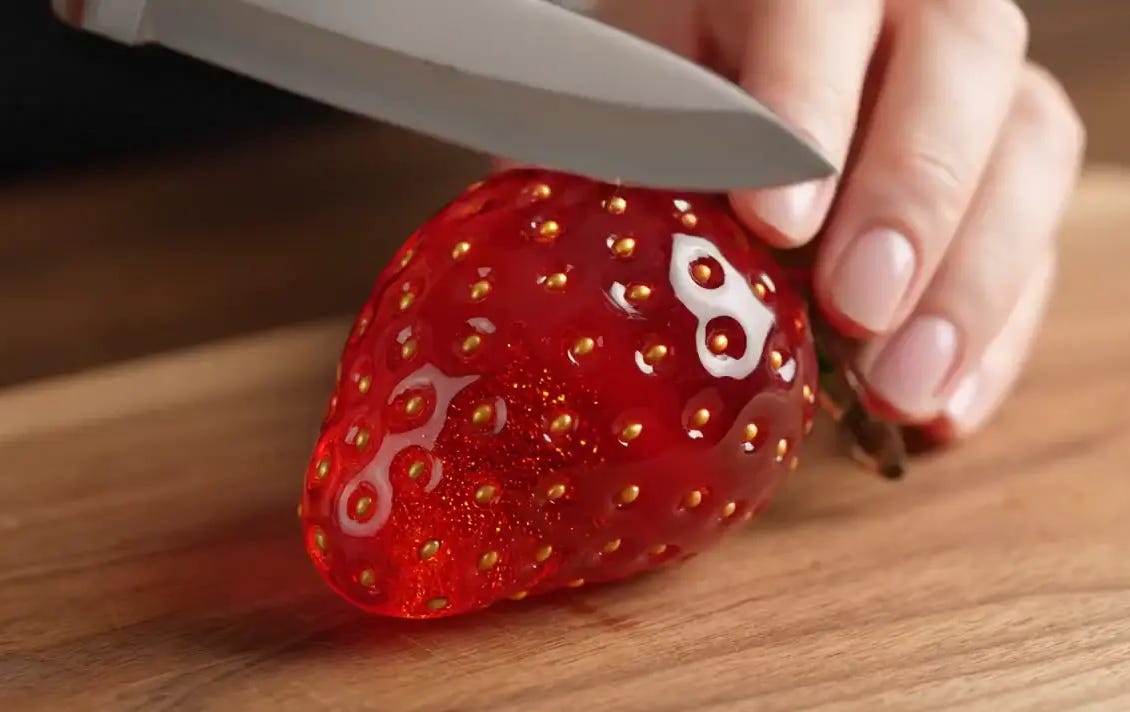
That’s what I was doing, anyway. I watched so much dumb shit in that room. SNL clips I’ve seen a billion times. Farm animals on YouTube. Pundits explaining how everything got so dire. Instagram witches hexing aesthetically. AI clips of knives cutting glass fruit, trying to figure out why someone had gone to the trouble of making something so meaningless.
A nurse would come, or I’d realize my hand was cramping, and I’d look up, and everyone was staring into their glowing little portals. It reminded me of a sci-fi movie: each astronaut encased in an individual pod that pumped in vitamins and oxygen and TikToks speculating on celebrity facelifts.
We wanted to be with the patients, of course. We wanted to hold their hands. The patients wanted the treatment, of course. They wanted more life. But no one actually wanted to be in that room.
One afternoon, I heard a patient in the next bay. A Black woman in her 70s. She was a level of sick that becomes a person’s entire visual identity—it was all I saw when she was wheeled by, frail, swimming in her clothes and wool cap.
I could hear her talking to her sidekick. She had a beautiful voice. Warm and regal and knowing. She was recounting a story about a class she used to teach. She and her sidekick were laughing.
It hit me so hard I lost my breath. This wasn’t just some frail old lady. This was a matriarch. It was obvious that she’d moved through most of her life dazzling people wherever she went.
I wanted to know everything about her. I wanted to introduce myself and ask a bunch of follow-up questions. But that wasn’t done. And what if she started to answer my questions, and I beheld everything she was and everything the world would lose when she died, and I started crying and I couldn’t stop?
There should be a formal etiquette here, I remember thinking. Someone should come in to announce each patient, like when royalty enters a ballroom on Bridgerton.
Music teacher of 46 years. Grandmother of 7. Baker of pie. Hilarious when drunk. Fearsomely efficient shopper. Fed elephants in Thailand. Unbelievable Wordle streak. Just, you know, the important shit. And then everyone would clap as the patient moved past. And yeah, maybe everyone would cry for a second, but since everyone was doing it, no big deal, we’d all chuckle and sniffle and pull our shit together and go on with the day.
I’m not saying it would turn into a cocktail party. But that’s why it feels important to know how many of that lady’s students went on to Juilliard. I need her to be more than Sick. For this person I brought to the center, who renovates Victorian houses, who has a wall full of diplomas and a dog that makes chicken sounds, to be more than Sick in the eyes of everyone who beholds them. I want something to hold on to in the Underworld besides the disease and the inadequate weapons wielded against it.
Six rounds of treatment later, it was our last day. Every nurse gathered to make a circle around the patient. They were holding a banner: YOU DID IT!
And finally, the big moment, which I managed to record on my phone because I’m fantastic at holding electronic devices steady while overcome with emotion: a nurse handed the patient a bell.
The patient had been tired, napping most of the day, but they grinned. And they rang that fucker with so much satisfaction. Defiance, really. There’s true fuck you, I made it energy when you survive a treatment that can kill you to push back a disease that can kill you. They rang, and rang, and rang that bell.
I sent the video to a bunch of our friends.
FRIEND 1: Wooooooo! RING IT!
FRIEND 2: So the gods can hear!
FRIEND 3: Wow, just look at those beautiful nurses holding the space.
FRIEND 4: Yes, that is some HIGHLY shamanic shit right there.
That’s when I got it.
Compartmentalize, yes, if that enables you to bear it. Fashion a chainmail persona, catch a doomscroll wave. But know that you’re doing it because somewhere along the line we lost the rituals.
It’s not the fault of anyone in that room. I will never be angry at doctors for accepting the culture; they’re trying to outrun burnout, treating patients in tightly timed windows, fighting insurance companies, taking their charting home with them. And nurses, Jesus Christ, they’re already doing the job of 17 people. And the pharmacists? Their day-to-day is Denzel-Washington-movie intense, sitting in a locked room compounding chemicals that blister flesh on contact and must be infused within 45 minutes; honestly, my most challenging side quest of that whole era was getting this one pharmacist who walked by a lot to smile at me.
No medical professional chose their career dreaming only of measurements and protocols, authorization forms and appeals. Don’t misunderstand me—I wouldn’t trade modern medicine for the best village healing of yore; I’m a huge fan of anesthesia. But somewhere in the science, the streamlining, the scaling up, and most of all the epic profiteering, all the ritual fell out of each encounter between the sick person and the treatment—its environment, its creators and technicians. I experience more intentionality when I get acupuncture for tech neck.
Obviously, a center treating the immunocompromised can’t have a corgi named Chet greet patients at the door. I’m thinking more of how the acupuncturist performs the actual treatment. She adds a brief extra step once the needles are in. She touches my feet. In unhurried singsong, she asks me to breathe, loosen my jaw, feel the table under my butt. This ritual takes less than a minute. It makes an immense difference. The moment of physical contact that isn’t about poking me with something sharp. The familiarity of the words. The beat where we’re both doing the same thing: shifting from where we just were to where we are now. I feel her focus as she scans me to make sure everything is right. I thank her. She says, “Enjoy your rest.” I feel my body finally settle.
I’m not asking for incense in the medical center. I don’t care how the ritual is dressed up, just that it honors the magnitude of what’s happening. In the Underworld, what’s happening is the most consequential diagnosis of the patient’s life. But I think these 45 seconds of respect are also called for when your kid is getting their shots or you’re having an IUD inserted. What’s happening is always an encounter between a person who has dedicated their life to medicine and a person with an equally important life who will be changed by it. None of this seems small to me, even when the reason for the appointment is small. It’s only possible because of so many things we shouldn’t take for granted. The occasion requires a whiff of ceremony. Wants it.
I know this because in tiny ways, we rise to fill in those gaps. “Tell me again, do you like numbing spray?” The nurse asks before accessing the patient’s port, even though they know. The patient answers; the nurse nods, then begins. It becomes a blink of acknowledgment that they’re crossing the boundary between everyday life and an Underworld of bright red biohazard medicine. I think they both need it: a moment of agency for the patient, a moment when the nurse’s identity is not dispenser but healer, personalizing the protocol to the human being they’re about to lay hands on.
But here in the States, we don’t generally recognize those pauses for what they are. And they weren’t meant to do that level of ritual work. So we rush them, we automate them, we skip them, we fail to take the moment they offer.
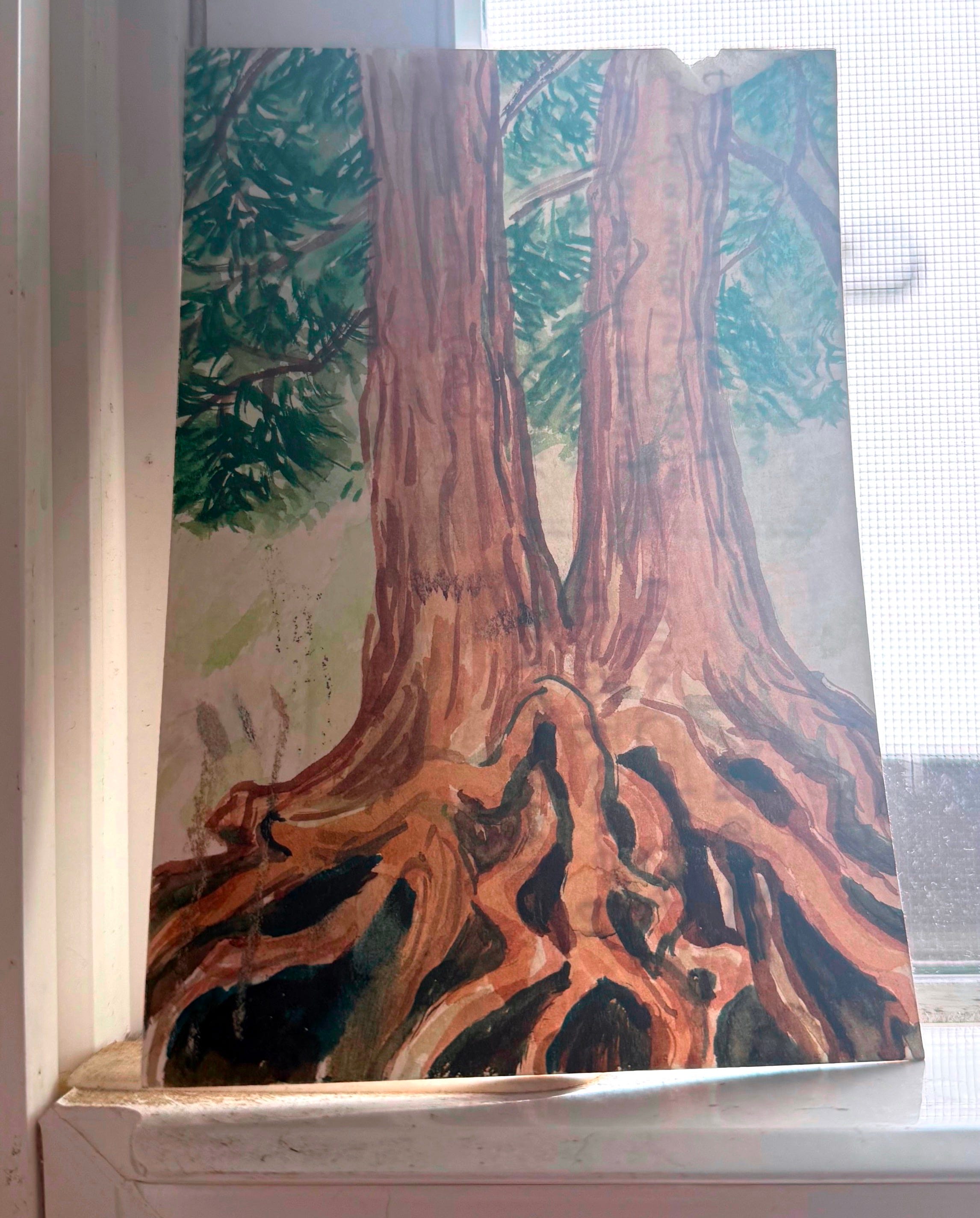
A bunch of our friends are Buddhists. One night, we sat around a table. I’d cooked chicken and asparagus. They’d brought wine and cheese and Persian Love Cake. They told me stories of their encounters with the Underworld, some ending with hope, others just ending. A nice thing about people who meditate a lot is that they can sit with feelings. No one tried to be funny or change the subject.
My husband grabbed a votive candle. “I have an idea,” he said. “We’re going to fill it with wishes for the treatment.” This was an adaptation of a longstanding birthday ritual in our circle. We pass a candle around, say what we desire for the Birthday Person; at the end, they light it, add their own wishes, then blow it out, setting everyone’s aspirations free to do their work.
The patient ended up burning it a little bit every morning. I’d walk in and they’d be sitting at the breakfast table, holding matches. We’d light it, hold hands, log an extra wish or two. They’d blow it out, and we’d get in the car. A tiny ventilation hole in the canopy of the Underworld.
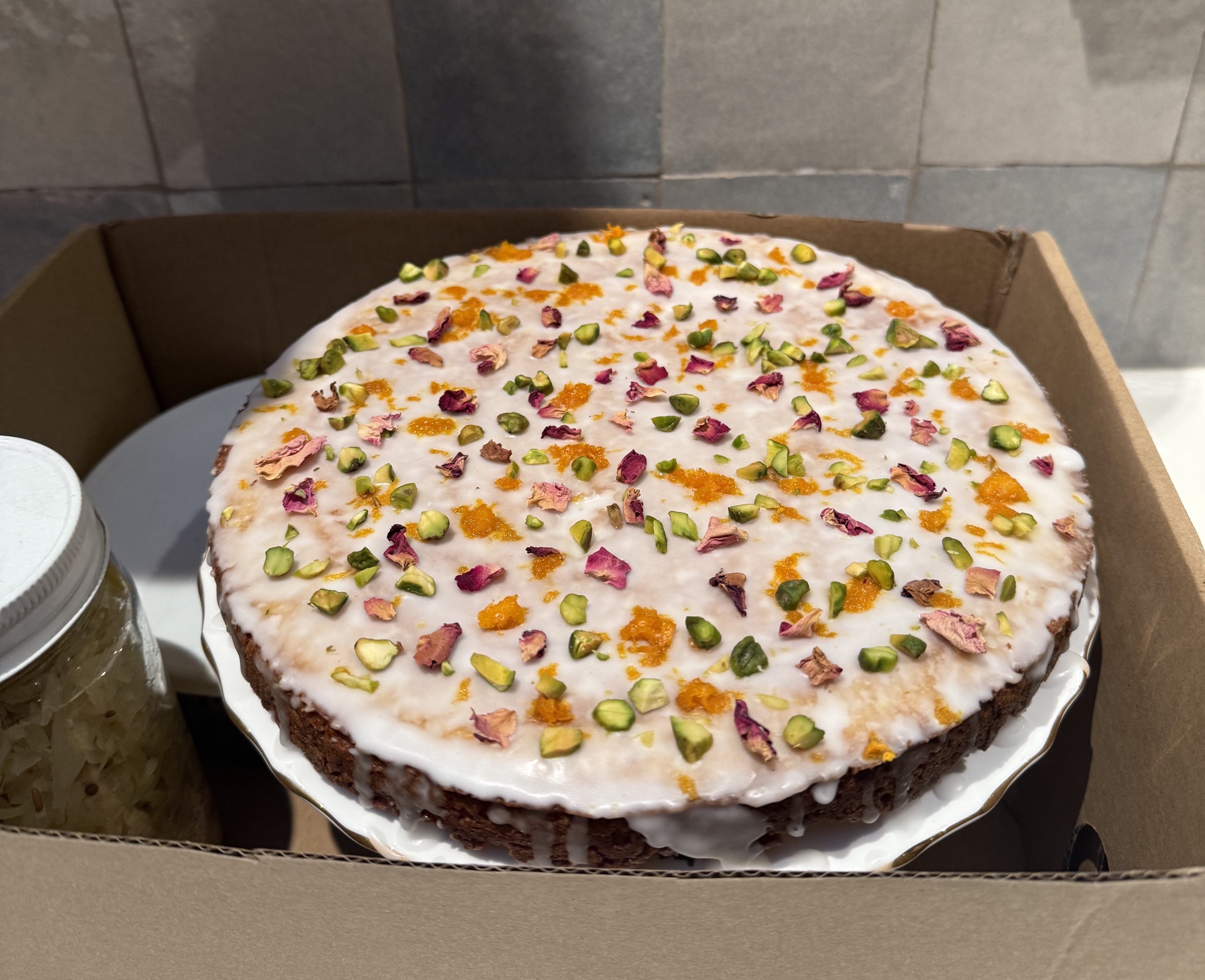
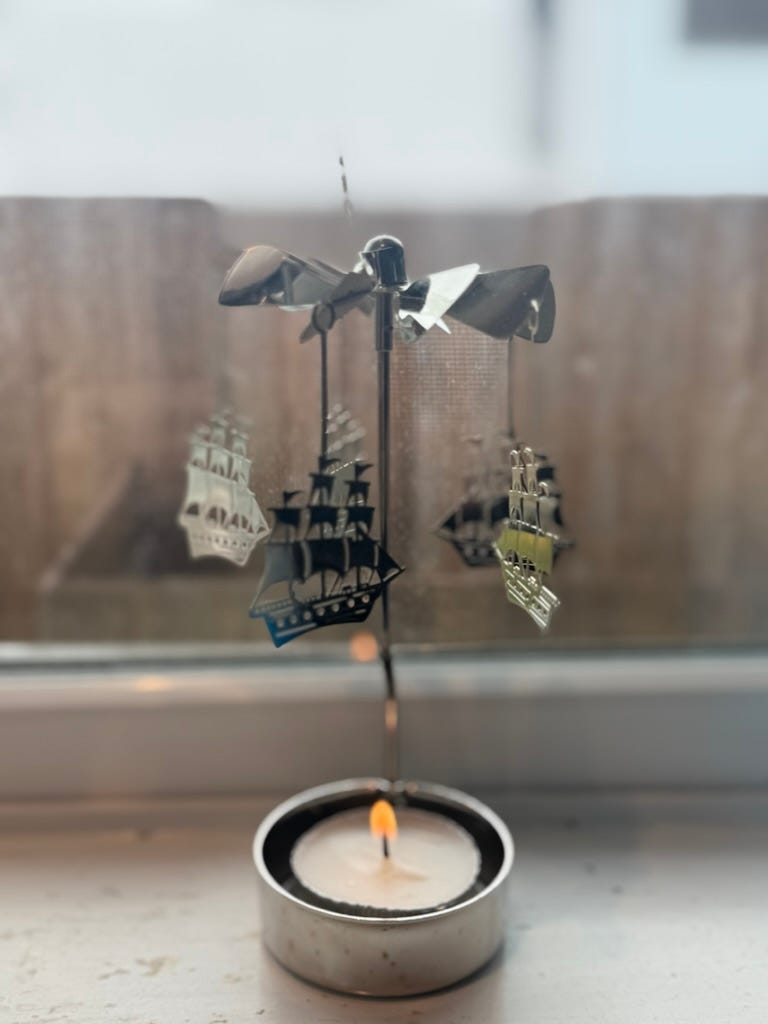
Without realizing we were doing it, we kept adding to the ritual. I bought an orchid at Trader Joe’s. We named it Mona and it became the third sidekick, coming with us to the center and home every day. Then the Love Cake baker sent a photo of a candle lit on the patient’s behalf. The candleholder had a delicate metal mobile activated by the flame that spun, casting heart-shaped shadows; she called it a Prayer Machine. So I bought one, and the Morning Candle ritual became the Morning Two Candles ritual. We’d sit watching the little silver birds. Then we’d pull our shit together and go to the car.
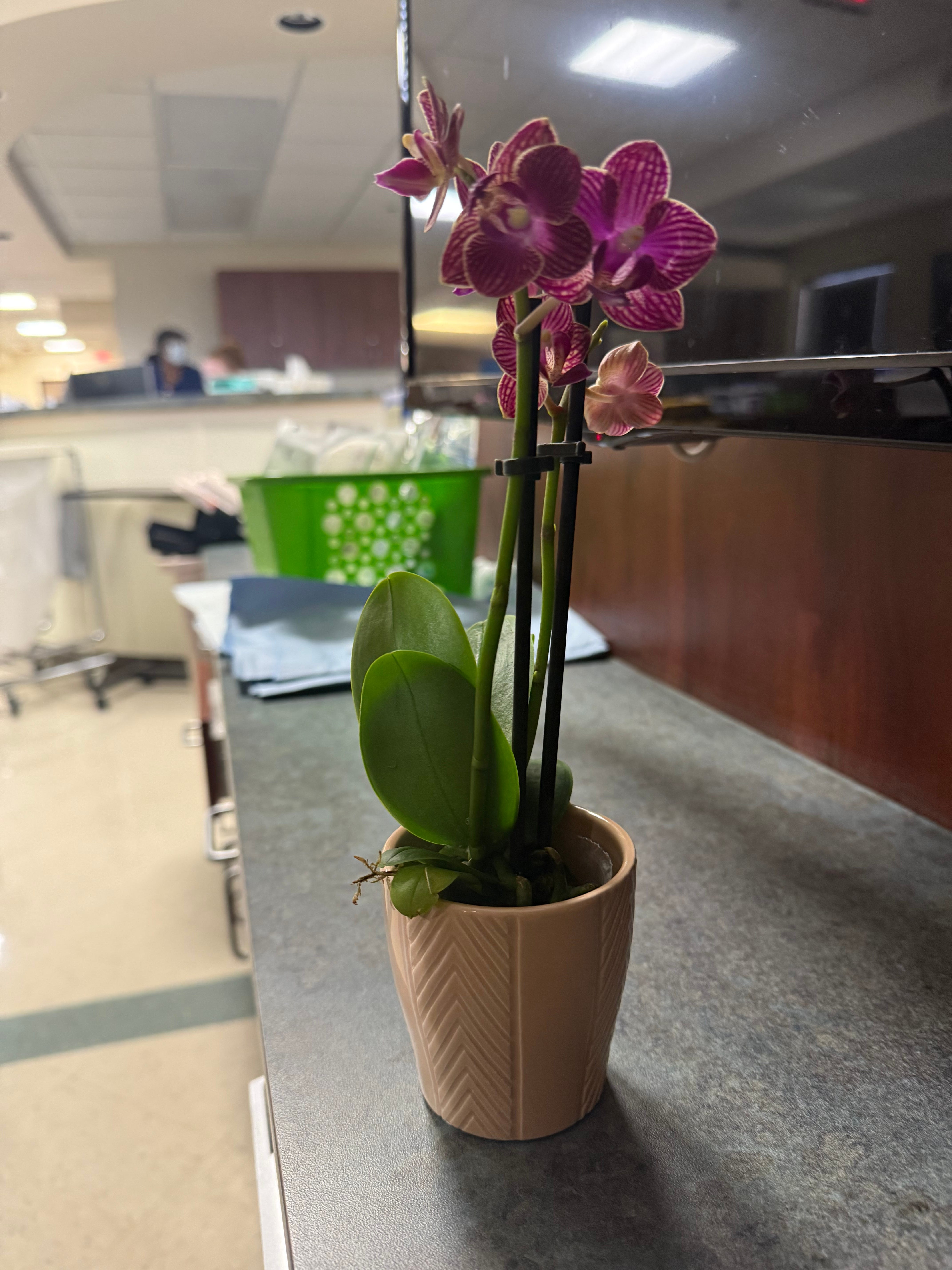
I think it’s just part of being a person. Not only that we need some amount of ritual that speaks to our humanity. That we build it instinctively. We can’t help it. “Hope the treatment goes well” becomes a candle becomes two candles and an orchid.
I think life goes better when we do it on purpose. When we carve the tiniest bits of intentional space, all those half-effective gestures can revert to their intended mundanity. Everything feels infinitesimally simpler, which, in the Underworld, is a lot. We feel more whole. Seen by each other. And in this together.
What nurse first thought to bring a bell to work? First of all, we should put a statue in their honor in the town square. But also, I imagine it was the same feeling inside them—a yearning tug. Something’s missing here. Then, their eyes alit on a bell, or maybe they remembered one from grade school, the kind on the wall that rang to mark the end of class.
I bet their whole face lit up. I bet they knew they’d just had a great idea.
I am no longer solid after reading this. I am liquid. I am a puddle. Thank you.
Thank you for this gorgeous and moving essay. I didn't know anyone else knew about Persian Love cake!